Case study 04 · Squad Hackathon 3.0
Workforce Integrity Engine
A four-person Squad Hackathon prototype combining explainable risk scoring, human investigation workflows, audit visibility, and payment controls for proactive payroll-integrity review.
Recognition: Top-20 team stage · Squad Hackathon 3.0
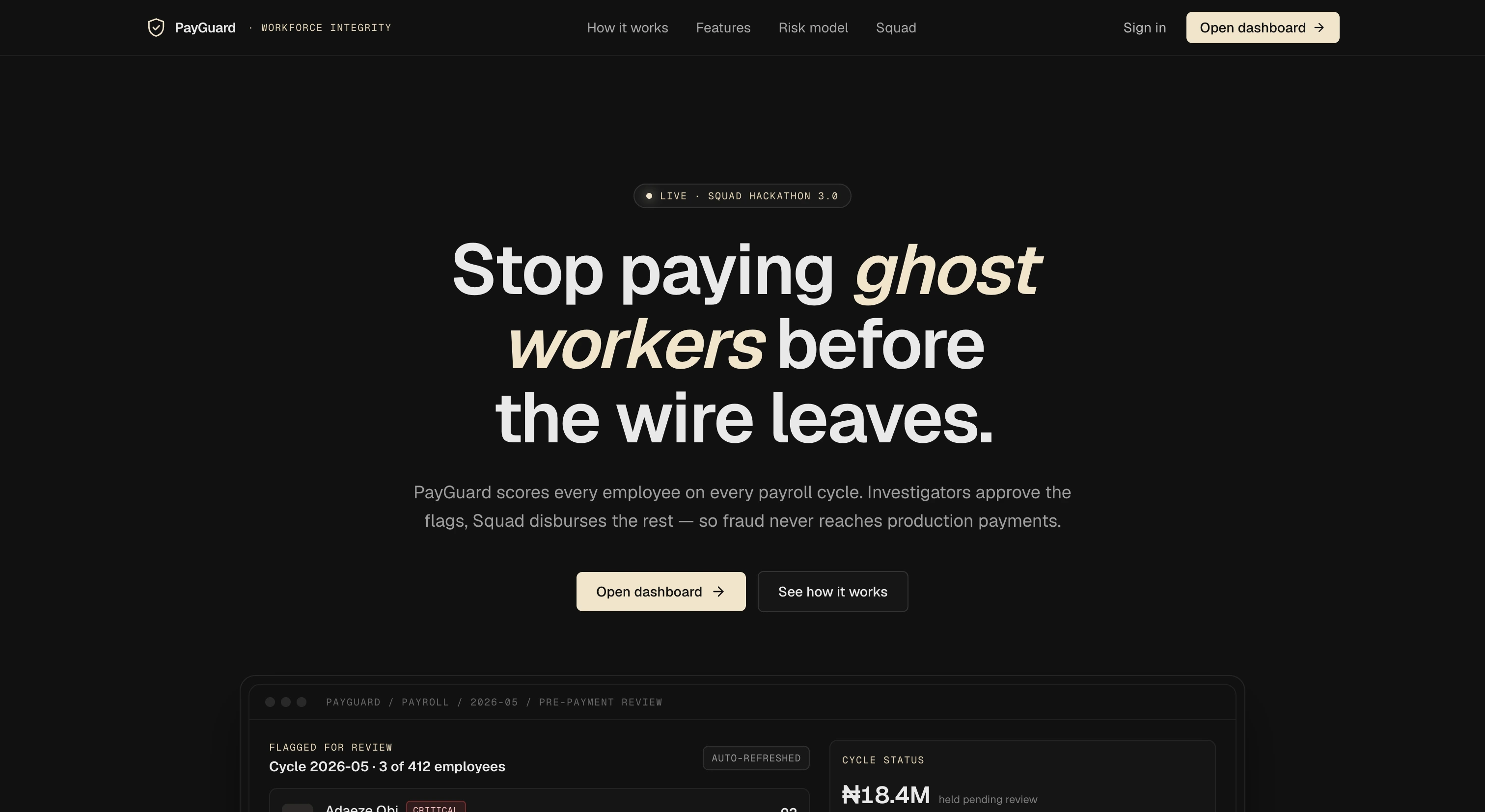
- Role
- Frontend engineer · 4-person team
- Primary outcome
- Pre-payment review demo · Risk scoring, investigation, and controlled disbursement
- Core stack
- Next.js, TypeScript, TanStack Query
Continuous payroll-integrity intelligence with human-controlled payment intervention
Problem
Traditional payroll systems process transactions but often discover ghost workers, duplicate accounts, salary anomalies, and stale identity records only after funds have been disbursed.
Workforce Integrity Engine was designed as an intelligence layer above existing payroll infrastructure, helping institutional finance and audit teams identify suspicious behavior before a payment leaves.
Solution
The prototype correlates payroll records, attendance behavior, verification freshness, historical trust patterns, peer-group deviations, and payout anomalies.
It demonstrates an operational review workflow designed to:
- Generate evolving employee trust scores
- Surface explainable anomaly evidence
- Identify suspicious relationships such as shared payout accounts
- Route high-risk records to human investigators
- Pause, approve, or release payments through Squad-backed workflows
- Preserve an audit history of model signals and human decisions
My Contribution
I worked as the Frontend Engineer in a four-person team.
My responsibilities included:
- Building the Next.js interface for payroll review and risk investigation
- Presenting multi-signal risk scores without reducing decisions to opaque AI labels
- Implementing workflows for anomaly evidence, trust monitoring, and payment intervention
- Connecting frontend journeys to project APIs and Squad's test environment
- Collaborating with backend and machine-learning engineers during rapid hackathon delivery
The wider team delivered the backend, intelligence models, data workflows, and supporting product work. The hackathon result belongs to the team; the responsibilities above describe my personal contribution.
Product and Engineering Approach
Explainable Risk Intelligence
- Deterministic fraud rules detect conditions such as duplicate payout accounts and unusual salary changes
- Statistical anomaly detection surfaces deviations from historical and peer-group behavior
- Every flagged record includes evidence and reasoning for investigator review
Human-in-the-Loop Controls
The prototype does not make irreversible employment or financial decisions autonomously. Its demo flow requires investigators to review the evidence before approving, escalating, blocking, or releasing a disbursement.
Squad Integration
The prototype connects its frontend workflows to Squad APIs and a virtual-account test environment for identity checks, payout controls, and transaction-linked audit flows. In the demo, payment release follows the relevant human-review step.
Frontend Stack
- Next.js and TypeScript
- Tailwind CSS
- TanStack Query for server-state workflows
- Zustand for focused client state
- Recharts for operational risk visualisation
Outcome and Recognition
The team delivered a public working prototype and reports advancing to the top-20 team stage of Squad Hackathon 3.0. Independent event coverage reported more than 1,600 undergraduate applicants; the top-20 figure describes the team's competition stage rather than an individual ranking.
Why This Project Matters
Workforce Integrity Engine demonstrates frontend engineering for a high-stakes operational system: dense data, explainable machine-learning signals, financial controls, audit requirements, and human judgment all need to work together clearly.
Links
- Live product: https://payroll-guard.vercel.app
- Source: https://github.com/TRIPLE-ADE/team-payroll-ghost